Canine olfaction EEG
Honors thesis, UC Berkeley Cognitive Science, 2022. Advised by Prof. Lucia Jacobs; second reader Prof. Frederic Theunissen.
The question was simple to ask and hard to answer: when a detection dog recognises a smell, does that recognition show up in its brain in a way a machine can read? If it does, you no longer have to wait for a dog to sit or point. You can listen to the recognition itself, which could make canine disease detection faster to train, easier to scale, and less of a black box.
The build
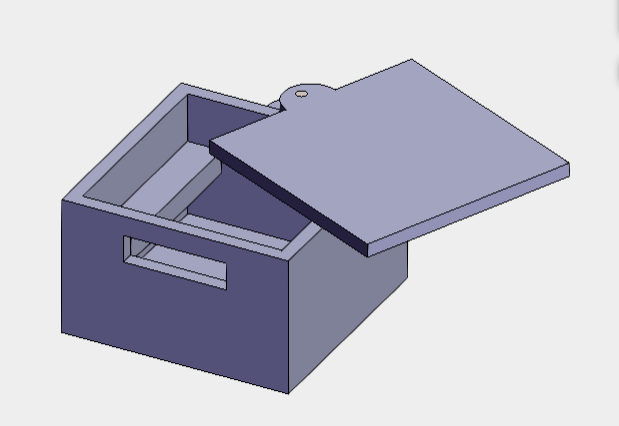
A four-channel EEG rig on an OpenBCI Ganglion board, with dry electrodes so there was no gel in a dog’s fur, and a 3D-printed enclosure riding on a harness. The plan was to record while dogs were trained on scents, then use a compact neural network for EEG (EEGNet) to test whether different odours leave different signatures.
The pilot
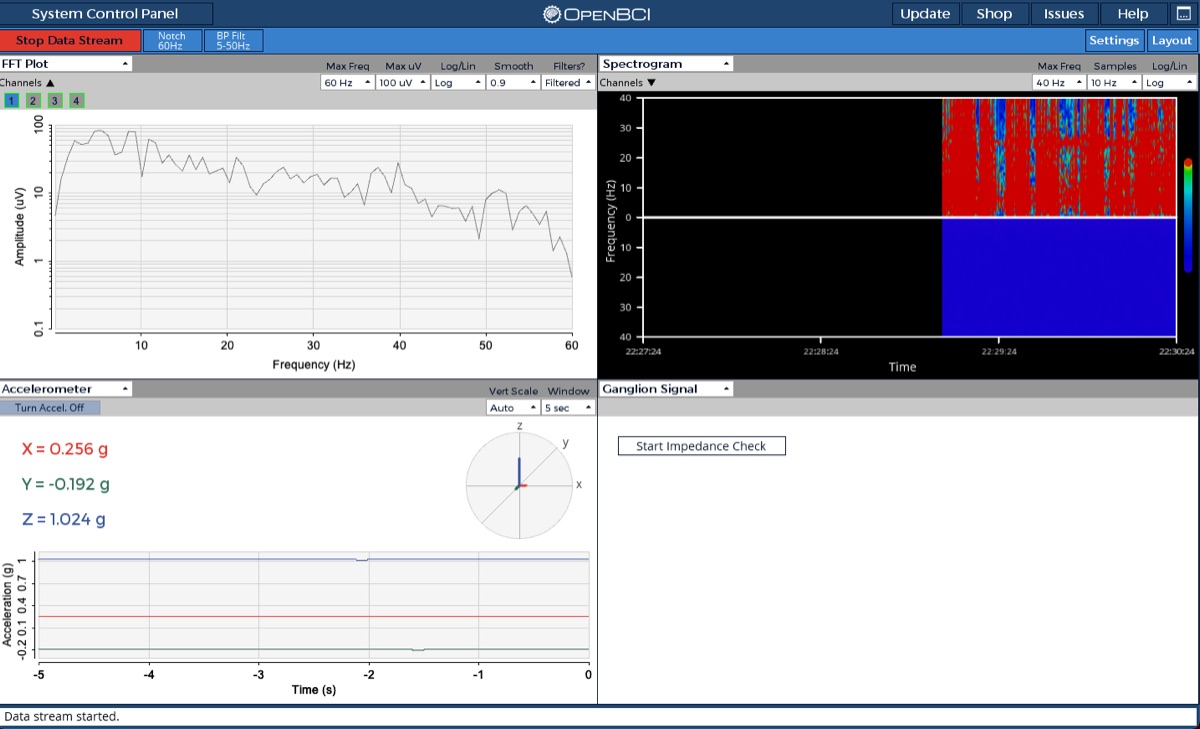
In March 2022 I recorded the first pilot sessions with two dogs, Woody and Caya: the rig’s first recordings from a dog wearing it.
The theory
The written thesis, Towards a 4E Model of Canine Olfaction, argued that a dog’s sense of smell can’t be understood as a nose passing data to a brain. Smelling is embodied (the whole body sniffs, moves and orients), embedded in an environment, enacted through behaviour, and extended by the handler and the task. It won the Robert J. Glushko Prize for Distinguished Undergraduate Research.
Where it went
The rig was the prototype for Dognosis. The same questions became a systematic review of non-invasive canine EEG (2025), a paper on canine brain–computer interfaces (2024), and a sensor-rich workstation and suit for detection dogs grounded in the same 4E ideas (2024).
Read the thesis (also on OSF), the thesis proposal, and the Spark Grant proposal that funded the build. See also DogDoc.